• strict warning: Non-static method view::load() should not be called statically in /home/active5/public_html/drupal6_multisite/sites/all/modules/views/views.module on line 906.
  • strict warning: Declaration of views_handler_filter::options_validate() should be compatible with views_handler::options_validate($form, &$form_state) in /home/active5/public_html/drupal6_multisite/sites/all/modules/views/handlers/views_handler_filter.inc on line 607.
  • strict warning: Declaration of views_handler_filter::options_submit() should be compatible with views_handler::options_submit($form, &$form_state) in /home/active5/public_html/drupal6_multisite/sites/all/modules/views/handlers/views_handler_filter.inc on line 607.
  • strict warning: Declaration of views_handler_filter_boolean_operator::value_validate() should be compatible with views_handler_filter::value_validate($form, &$form_state) in /home/active5/public_html/drupal6_multisite/sites/all/modules/views/handlers/views_handler_filter_boolean_operator.inc on line 159.
  • strict warning: Declaration of views_plugin_row::options_validate() should be compatible with views_plugin::options_validate(&$form, &$form_state) in /home/active5/public_html/drupal6_multisite/sites/all/modules/views/plugins/views_plugin_row.inc on line 134.
  • strict warning: Declaration of views_plugin_row::options_submit() should be compatible with views_plugin::options_submit(&$form, &$form_state) in /home/active5/public_html/drupal6_multisite/sites/all/modules/views/plugins/views_plugin_row.inc on line 134.

A Tale of Three Cities

The following first appeared in WTN News. I had a great time writing it, and enjoyed the feedback it received from readers. You can see the originally published version here. Let me know your thoughts!
____________________________
Quick, spot the similarities: Silicon Valley, New York City, and….Madison, WI? Let's see. Smog levels aren't quite the same. Slight differences in population base, local cuisine, and fashion sense. But at one investment event in Oct. 2009, it was all about the tech.

Biotech, specifically. Life science entrepreneurs in hot pursuit of funding was the focus of the All Things Life Sciences VC forum, in which female biotech start-up leaders vetted by Springboard Enterprises made pitches to investors in three different cities. Madison was first on the road show, followed by Silicon Valley on 10/15 and NYC on 10/30.

Biotech and Regional Economic Development

At first glance, it seemed an incongruous grouping of locales. Not to cast aspersions, but how does Madison - est. population just under 230,000 - measure up to Silicon Valley and New York City? “Madison is an important biotech center,” said Lauren Flanagan, Managing Director of Phenomenelle Angels Fund. In comparison to larger Midwestern cities, Minneapolis is known for medical device companies; Chicago, for general and medical IT; and St. Louis for agbiotech, chemicals and pharma. Madison's niche is arguably still evolving, with strengths in microbial sciences, stem cells, lab research tools, and diagnostics. But in particular, there is growing recognition that in addition to being a good place to grow cell cultures, Wisconsin is a good place to grow early-stage companies.

Business Bargains
“You can get angel funds in Wisconsin, and keep the burn rate low,” says Flanagan. “Having started four companies and having grown up in the Bay Area, what I like about Wisconsin is the rich repository of talent.” Similar sentiments are echoed in irrepressible fashion by Penelope Trunk, who bluntly titled a Brazen Careerist blog post, “Starting a company in Silicon Valley is stupid”. A 2009 salary survey of life science professionals by The Scientist reported that the average Madison salary was, at $63,050, lower than all other U.S. cities for which data was collected aside from Charlottesville, VA. (However, the reader survey did not use random sampling, so it's entirely possible that entry-level or lower-paying public sector scientific positions were overrepresented.) Considering that the Ph.D. density in Madison is among the highest in the nation, one could speculate that the region is a great place to employ skilled talent on the cheap. Small comfort to job seekers, and likely a topic that state and local politicians would rather avoid, but encouraging to firms wanting to stretch their seed money as long as possible.

And certainly, the cost of living in Madison is miniscule in comparison to Silicon Valley and New York City, allowing a far lower salary-induced burn rate for early-stage companies. But the cost of lab and office space also has significant impact on start-up burn rate. Whether leased or owned, lab space in New York City is the most expensive in the nation, and the Bay Area isn't far behind.

When weighing time versus money, shorter commutes also play a role in lifestyle and work productivity. The average work commute in Madison is 16.4 minutes; in the Bay Area, consider yourself lucky to have a commute time at least double that; and NYC? Unsurprisingly, the longest in the nation.

Show Me the Money

However, a lower bottom line doesn't help much if you can't attract funding to begin with. And this is where the dominance of the carefully cultivated Silicon Valley venture capital scene really makes an impact.

“There's more money in one hallway of a VC firm on Sand Hill Road [in Silicon Valley] than in all of Wisconsin, Michigan, and Illinois combined”, says Flanagan. This is not an exaggeration. Venture capital investments in 2002 in the state of California were 145-fold higher than in the state of Wisconsin.

Seed money and initial funding is however possible to land in Madison. “I navigated the boy's club in Madison enough to know there's tons of money here,” said Trunk during a panel discussion at the ATLS forum. And with angel investor support comes invaluable business advice and mentoring. Recently, state support in Wisconsin in the form of the Act 255 Venture Capital Tax Credits program has helped spur funding as well. But it's not enough; the “black hole” of fundraising from approximately $3-$5 million looms large in the Midwest. Entrepreneurs unable to traverse it will see their companies fail. And despite earnest efforts from state and local government leaders and some progress made by groups of angel investors pooling resources and closing bigger deals than individual angels could have undertaken, this is unlikely to change anytime soon. Wealth creation doesn't happen overnight.

Silicon Valley Redux?

During a Gilson Series seminar in February, a provocative question was raised from the audience. Is Madison at a stage similar to 1975-era Silicon Valley, and if so, what transformative events are needed to propel further its development? Joe Kremer, Director of Wisconsin Angel Network, cited the Vision 2020 report produced by the Wisconsin Technology Council as one potential road map, but cautioned, “We're Wisconsin. We're never going to be Silicon Valley…our strategy will be different than those of the coasts. We'll do it the Wisconsin way.”

Certainly, the allure of Silicon Valley lucre is intoxicating to economic development gurus. The problem, points out Darian M. Ibrahim, Assistant Professor at the UW Law School, is that the Silicon Valley scenario is incredibly difficult to replicate. Its history as a high-tech economic powerhouse is relatively short and serendipitous. As late as 1950, the region was most famous as “The Prune Capital of America”. Shifting from an agricultural economy to a technical economy occurred in several stages, the first having more to do with air - radio airwaves, that is - than silicon. Electronics manufacturing exploded in Bay Area just prior to 1970, spurred by specialty firms producing components that found a voracious market in the U.S. defense industry. Interestingly, this early phase of wealth and labor pool establishment (leading to a skilled electronics work force of 58,000 by 1970) didn't rely on heavy-handed guidance from politicians or economic development gurus. It relied on spontaneous proliferation of companies that just happened to have specialty products, the right organizational structure to out-compete everyone else, and an eager market. Money made in the initial stages began to be funneled back into VC investments for later-stage firms in the burgeoning IT field. While the role of technology transfer from Stanford University and other Bay Area academic institutions is often credited with facilitating technology transfer in Silicon Valley, a 2001 analysis by Christophe Leguyer concludes that academic tech transfer played only a small role in the first critical stage of wealth creation.

So, in that respect, public sector efforts to replicate Silicon Valley may be unlikely to achieve the same effect; certainly, other attempts in the U.S. have failed. If true, this may turn out to be disappointing for politicians and economic development leaders in Wisconsin. For example, the Vision 2020 proposal lays out a plan for hand-picking technology clusters across the state and establishing a research arm of “futurists” and leaders to guide tech transfer envisioned as flowing from the Wisconsin Alumni Research Foundation and the UW System. But will this allow enough flexibility? Arguably, such a plan is more akin to efforts taken in Research Triangle Park in North Carolina, which was inspired by state and local leaders from its inception. But it may not spur the level of explosive growth, market responsiveness, innovation and creativity seen in Silicon Valley.

No Envy for the Big Apple

Still, things could be worse. You could be trying to grow biotech in NYC. As home to Columbia, NYU, Mount Sinai, and Memorial Sloan-Kettering Cancer Center among others - not to mention 19 Nobel Prize winners and 39 Howard Hughes Medical Investigators - there's no shortage of research and potential for technology transfer. But while technology transfer offices in NYC institutions have found a niche in making licensing and royalty deals ($791 M in 2007 revenue for NYU alone), the number of spin-off biotech firms that establish within the metro area is astonishingly small - a city-wide total of 21 in 2007 across seven colleges and universities. (For comparison, WARF/University of Wisconsin alone facilitated 6 start-ups in FY2006-2007 and another 6 in FY2007-2008.) The high cost of labor and real estate certainly has a chilling effect on entrepreneurial activity within NYC. But even competition for the relatively low-lying fruit of SBIR/STTR grants has been lackluster. NYC companies landed only 43 SBIR grants in 2006. Wisconsin firms landed 77 in the same year.

Nature and Nurture

One has to wonder how much cultural norms come into play. Is risk tolerance simply higher in the Bay Area than the Midwest, and if so, will this ultimately limit entrepreneurialism in this region? On the flip side, could “West Coast tunnel vision” lead investors there to overlook high-quality opportunities elsewhere? Could a stereotypical hard-driving NYC negotiation style coupled with a desire for fast payoff be behind the push for licensing revenue over entrepreneurialism, which requires far more patience?

And if Midwestern economic development leaders and politicians are to do some difficult self-assessment, how helpful are our deeply ingrained state rivalries? When press releases trumpet the relocation of tech firms within the Midwest, there is a hint of football-induced jubilation: Wisconsin 1! Michigan 0! Score!

But economic growth is likely to require cross-regional collaboration on a far longer timescale than the next political campaign. As Flanagan noted, “There is a need for strategies like funds-of-funds, where private and public capital are invested into regional opportunities, so that there is sufficient follow-on money for entrepreneurial success.” This takes a long view, collaboration, and stomach for risk.

Game on.

Footnotes

In 2004, Forbes Magazine ranked Madison 1st in the nation for Ph.D.s per capita. In 2009,Forbes Magazine ranked Madison 12th for percentage of population age 25 or higher having at least a bachelor's degree.

PriceWaterhouseCoopers/Venture Economics/National Venture Capital Association MoneyTree Survey, 2002

Leguyer C, “Making Silicon Valley: Engineering Culture, Innovation, and Industrial Growth, 1930-1970”, Enterprise & Society 2001 2, 4:666.

Youthful Ideas


'Tis February, and a college student's thoughts turn to.....innovation?


For students on the University of Wisconsin-Madison campus, this is certainly the case. This week brought two very fun events: Innovation Days, a competition organized by the UW Department of Engineering; and the Wiscontrepreneur 100 Hour Challenge, offered by the UW-Madison Office of Corporate Relations. 


UW undergrads competing in Innovation Days are pursuing a total of $28,450 in prize money across four different contests. The top prize of $10,000 is for the Schoofs Prize for Creativity, which is intended "to awaken students to the potential embedded in their own talent, and thereby encourage creativity and entrepreneurship". Other categories include the Tong Prototype Prize and awards for best presentation and best design notebook, respectively.

This year’s contestants cover 23 inventions, with titles ranging from “Intelliwindows” to “Tri Crimp”. The presentations were open to the public on Thursday and Friday at the UW School of Engineering. The keynote speaker? Matt Younkle, serial entrepreneur. He co-invented the TurboTap – a device to pour draft beers rapidly – which won the Schoofs Prize in 1996. Younkle’s team later brought the TurboTap to market through their company, Laminar Technologies LLC, and the TurboTap was dubbed “Most Amazing Invention” by Time Magazine. If you’ve had a beer at a major sporting stadium in the past five years, it was probably used to pour your beverage.

And on tap for next week (ok, couldn’t resist that transition)….is the Wiscontrepreneur 100 Hour Challenge, running February 17-21. Taking a cue straight from “Junkyard Wars”, this event allows students a stipend of $15 to gather materials from the UW Surplus With A Purpose shop. Students then put their best creative foot forward to see what working inventions they can come up with in a 100-hour working period. Past winners include a team that developed a working water purification system using $10 worth of material that could be used for bacterial- or sewage-contaminated water.

I can’t wait to see what the kids come up with this year.

Tags:

Women Biotech Entrepreneurs Take the Stage

While I haven't had a chance to catch up on entries for a while, this is the first of three articles I wrote last fall for Wisconsin Technology Network News (WTN News). The AllThingsLifeSciences VC conference proved to be a fascinating glimpse into the biotech entrepreneurial scene, with a twist - all of the entrepreneurs giving pitches were women (and not just peripherally involved, but women who are founders and/or CEOs of their companies). You can see the original article in context here.

Having been a reader of WTN News for some time, it was rewarding to contribute as a writer. Look for future articles!

MADISON - Women CEOs of 18 early stage life science companies will gather at the Fluno Center in Madison on September 30th thru October 1st to compete for venture capital at AllThingsLifeSciences 2009. Attendees will include regional and national investors seeking out promising early-stage companies.

“To our knowledge, this is the first such venture capital forum with this focus," said Lauren Flanagan, Managing Director of Phenomenelle Angels Fund.

Similar events will be held in New York City and Silicon Valley.

“This is unique deal flow, not generally seen in Wisconsin,” said Flanagan, who has roots in the San Francisco area and is currently based in Michigan. Flanagan said that the Midwest offers distinctive opportunities for angel and VC investors. “Silicon Valley and NYC don't see many Midwest companies and will be impressed with the talent, generally lower pre-money valuations, and with the non-dilutive financial support that Wisconsin and some other Midwest states provide early stage companies - benefits which can make investment more attractive to coastal investors grown weary of competing for high priced startups.”

Judy Owen, General Partner of Calumet Venture Fund said, "I am so impressed with the quality of women entrepreneurs I have found in the Midwest focusing on Information Technology and Life Sciences.”

Flanagan and Owen are among investors who are bullish on the Midwest technology start-ups. They believe early-stage companies based in the region are undervalued in comparison to startups on the coasts. Skilled talent is readily available in Wisconsin due to proximity to research universities such as UW-Madison and UW-Milwaukee. State support includes the Act 255 Venture Capital Tax Credits program administered by the Department of Commerce, in which certified funds investing in qualified new business ventures can claim a 25% income tax credit on the investment. The result may be a win-win for investors and entrepreneurs alike.

Single-region investment where money flows from Midwestern investors to Midwestern start-ups, however, may not suffice in the long term as more private equity is available on the coasts than in the Midwest, a point not lost on entrepreneurs seeking to take funding to the next level.

Beth Donley, CEO of Stemina Biomarker Discovery, said, “We are a little more than a third of the way to raising a $3 million round…We hope that at the Springboard events…we will attract the remaining investment need to complete our fundraising [and] make contacts on the coasts for future fund raising and eventual exit through acquisition.”

Echoing the need for cross-regional investment approaches, Suzette Dutch, Managing Partner of Triathlon Medical Ventures, said, “We find the best coastal investments often have competing term sheets as there is significantly more venture money chasing the quality opportunities. For this reason we invest in later stage opportunities there and find that coastal investors prefer investing close to home for early stage opportunities. Being based in the Midwest, we are in place to work hands on very early to shape the investments that have true venture scale return possibilities.”

Since 2001, Springboard Enterprises has presented 18 forums highlighting 383 companies chosen from over 4,000 applicants. Of these 383 companies, 82% have received funding and seven have had IPO's.

Whine Flu

By now, you’ve probably heard something on the news about a new strain of influenza that’s going around. There’s been just a bit of coverage about it.
While listening to the online and face-to-face chatter, it seemed like most reactions fit neatly into two categories:

1. Fear/caution/preparedness/”The sky is falling”. Symptoms include altering trips or school in absence of personal illness or the advice of public health officials; stockpiling large amounts of food, antiviral medicines, face masks, or other supplies; foregoing pork; and flat-out panic upon hearing someone cough.

2. Indifference/outrage/ridicule of those in Group 1. Symptoms include derisive responses to public health warnings; argument that “the media is making this up” and “thousands of people die of the flu every year and only a handful have even gotten sick with this strain, so it’s all nonsense”. This occasionally advances to government conspiracy theories.

I have the upmost respect for both types of responses, each of which has some kernel of rational thought. Furthermore, many people will shift between one mindset and the other. That being said….

Those in Group 1 are wrong. They’re also right.

Those in Group 2 are right. They’re also wrong.

To understand why this is not just Alice-in-Wonderland doublespeak, let’s consider seasonal influenza in comparison to pandemic influenza. And to do that, it’s worth marveling at the biology of viruses.

Different viruses cause a range of diseases: the common cold, HIV/AIDS, smallpox, polio, influenza – just to name a few. Viral particles, or virions, are at the edge of living and non-living. Mere bits of nucleic acid encoding a very few genes and coated in protein, they don’t even have cells. (They don’t need to; they just hijack them.) They can lay dormant for minutes, hours, or years; in some cases withstand extreme heat or cold; and – rarely, but sometimes to devastating effect – can jump from one host species to another. When they infect a host, if they are successful, they have but one objective: to take over the host’s own cells to make more copies of themselves. If such a scrap of non-life could be said to have an ego, they would be narcissistic to the extreme – constantly muttering, “me, and more of me, and more of me…”

The most virulent types of viruses will do this without regard for the survival of the original host. This might seem short-sighted, until you consider that if their progeny can infect other individuals who come in contact with the first host, then it’s not such a dead end after all. All they have to do is make more of themselves; it matters not in whose body this occurs.

Battles between viruses and hosts occur throughout the biological world. It’s one of the cards living organisms are dealt, and when all goes well, we are unaware of the constant viral bombardment our bodies experience. Human immune systems deftly respond to the viruses we come into contact with, sizing up the danger, dispatching them before they cause trouble.

Until that system fails, and we get sick. Who hasn’t had a case of seasonal influenza? Every year, up to 20% of the U.S. population comes down with it – one in five people! – so it is extremely rare to go through your life and never have experienced the symptoms of fever, sharp headache, fatigue, muscle aches, cough, congestion, and sometimes stomach ailments. The telltale sign: you realize you feel slightly off, and then it’s like you’ve been hit by a truck that parks itself on your chest for at least a week, maybe two. That’s the difference between REAL influenza and all the other minor ailments we refer to as “flu”.

Now, the key thing to understand is that viruses are populations that evolve and change and mutate and recombine over time. It’s not one “virus”. It’s a seething, morphing, moving mass of viral particles that evolves with fury. So the strains of influenza virus that are most dominant in one year are almost never the same strains that will cause trouble the next year.

This is why the seasonal flu vaccine has to be prepared anew each season. Influenza experts in the U.S. do their level best, every year, to predict the future. They assess all the data at hand on what strains of influenza are circulating in the environment and the human population months before the upcoming season.

Then they make a guess as to which strains will win out come fall.

Then they ask the manufacturers of influenza vaccines to please make several million doses of vaccine to cover that year’s predicted cocktail.

Then they wait, and hope that they didn’t screw up.

In a normal year, about 36,000 people in the U.S. will die of seasonal influenza anyway. Maybe less – if the strains going around aren’t terribly virulent, and the flu experts guessed right about the vaccine. Maybe more – if they strains are strong, and the flu vaccine missed the mark, or not enough of the population is immunized*.

But the thing to realize is that the vast majority of people who die from seasonal influenza fall into at least one of three categories: the very old, the very young, and the already-ill. Often it isn’t the influenza that actually causes their demise; it’s a secondary infection such as pneumonia that their inadequate immune systems just can’t overcome.

But every so many years something different happens. A new strain, a new kid on the block, starts going around. It’s different from the others. It likely just recently discovered how hospitable humans could be as a host. Before it started looking at us as prime real estate, it preferred to cause misery in another host species. Birds, say. Or pigs. It helps if it’s a species in which there is a reasonable amount of human-animal contact, because it first makes the jump from the animal to the human caretaker.

Sometimes this ends up being a dead end for the influenza strain. It can jump from pigs to humans as a one-time deal, but can’t transmit farther.

And then sometimes, it accumulates another mutation or two, swaps another gene with a different influenza virus strain, and voila – it’s new and improved. Stronger. Better. It’s capable of human-to-human transmission.

In other words, it’s a potential pandemic strain.

So what do you look for in a pandemic influenza strain? Well, ideally it has a high rate of person-to-person infectivity. It will be completely unknown to the global human population, so it trips up immune systems that have never encountered it before. It will thus have a different pattern of infection: it will hit relatively young adults very hard. Now remember, young adults may get seasonal influenza, but they don’t normally die of it unless they have underlying health problems. With a pandemic strain, though, all bets are off.

So, how bad can pandemic influenza outbreaks get? Well, it depends on the strain and the times. Let’s look at the 1918 global influenza pandemic outbreak, for example. It’s a classic.

In the spring of 1918, there was a global wave of illness that was noticeable, but mild in terms of deaths. Autumn, however, brought the first of two more waves that were absolutely lethal. It’s been estimated that a total of 500 million people - or one-third of the world’s population at the time - fell ill by the time the epidemic was over. Of this, between 50 million and 100 million people worldwide died. The case fatality rates were over 2.5%, as compared to about 0.1% for typical seasonal influenza.

Put in perspective – if the same pandemic were to occur today given an estimated global population of 6.77 billion, 2.25 billion people worldwide would fall ill, and over 56.4 million people would die by the time the epidemic was over.

The thing is, when the 1918-1919 influenza outbreak happened, public health officials didn’t even know it was influenza. It happened too fast, spread too quickly, killed too quickly. In some cases it actually killed within hours, not days. We now know this was due to a violent overreaction by the immune system to the novel strain, causing viral pneumonia and what is termed a “cytokine storm”. The result? Massive, rapid filling of the lungs with fluid.

At the time, medical experts thought the disease was caused by a bacterium, not a virus. The pathogenic agent wasn’t identified until the 1930s. And it wasn’t until the mid-1990s that the genetic sequence was painstakingly reconstructed by researchers at the CDC using preserved autopsy specimens so scientists could try to figure out what was so very different about this strain.

Now keep in mind that there were a lot of other factors at play in 1918-1919. Lifesaving tools like respirators, antiviral medications, and antibiotics to treat secondary infections were either in limited supply or nonexistent because they hadn’t been developed yet. And World War I played a role; fighting was heavy throughout the spring and summer; troops were being shipped to and fro; and millions of people in Europe were displaced, on battlefields, taken prisoner, and otherwise subject to poor sanitation and health. Armistice didn’t occur until November 11, 1918, and the aftermath of war in terms of public health continued for months to years.

Mysteries remain, though we now know more about the strain itself. Virologists classify influenza strains in terms of the “flavor” of two particular proteins that are found on the viral coat: hemagglutinin, or “H”, and neuraminidasae, or “N”. The strain that caused the 1918 epidemic was an influenza A(H1N1) strain. Its origin is still unknown. Genetically, it appears to have started off infecting pigs, but the actual location from which it originated is still unknown. There is no smoking gun, or hog, as it were.

OK, so fast-forward to April 2009. One of the jobs of public health officials all over the world is to keep tabs on disease outbreaks of any kind, and the World Health Organization is charged with coordinating communication and response.

So medical practitioners in Mexico started to notice something. There was a large spike in influenza cases. This is atypical for the warmer months of spring and summer. Influenza virions usually survive and transmit more easily in cold, dry weather, when they hang in the air longer and people are congregated indoors. Even more alarming, it was causing what appeared to be an abnormally high death rate. And further? The people who were dying were young adults – in their 20s and 30s. Preliminary testing indicated it was a strain of influenza A, and appeared to be related to a strain of influenza that is endemic in pigs, but beyond that it couldn’t be typed.

So let’s think back again to the hallmarks of a pandemic influenza strain: novel? Check. Person-to-person transmission? Check. Kills young adults? Check.

You can now see why public health officials all over the world started to sweat.

The response over the next ten days was swift, and from all accounts thus far, effective. Mexico took measures to control the outbreak that included shutting down schools and public gathering places for a period of time. The Centers for Disease Control developed assays to determine the strain and began scaling up test processing. Healthcare officials set guidelines for patient testing and within days the pattern of disease became much clearer. Laboratories with expertise in growing “seed strains” for vaccine development were pressed into service. Clinical diagnostic technicians worked round the clock to process test samples. And by April 27, scientists at the CDC had completed sequencing the genome of the new strain and made the data available for researchers all over the world to examine.

As time progressed, public health officials began to be cautiously optimistic. It looked like the number of cases and deaths were lower in Mexico than initially projected, and although the disease was spreading, the death rate outside of Mexico appeared very low for reasons that are still not completely understood. Analysis of the strain’s genome indicated that while the 1918 pandemic strain was an ancestor, it lacked some of the features of the 1918 strain thought necessary for high lethality.

However, caution is still warranted. Though the number of hospitalizations in the US have remained low, the average age of patients hospitalized with this strain is only 15. The months to come will bring careful monitoring by the WHO and CDC. After all, this strain could easily evolve into a more virulent form. The very worst thing we could do is collectively ignore the advice of public health officials in coming months.

So was the response overblown? In a word, no. That’s the irony of addressing pandemic disease threats: when the response goes as it should, nothing happens. Beautiful, beautiful nothing. Public health experts are always in a difficult bind. If they sound a global alarm, their recommendations can bring travel, trade and economic growth to a screeching halt. And depending on the risk level of a particular outbreak, it is arguably worth it. But second-guessing after the fact is largely fruitless. If disease breaks out in spite of control measures, then we didn’t do enough. If it doesn’t break out, either we did enough, or it wasn’t going to happen anyway. But as you can appreciate, the risk in this case was very, very real – and the response has been dialed back appropriately as new information came in.

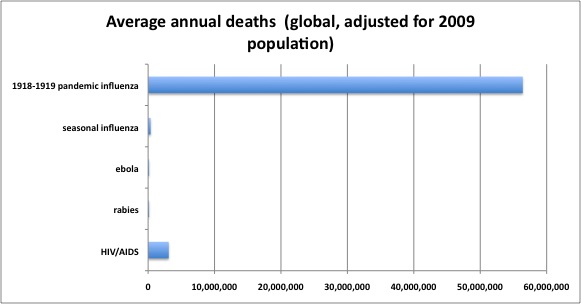
For comparison, let’s keep the impact of this in context with other viral diseases. Below I’ve charted average yearly deaths due to AIDS, rabies, ebola, seasonal influenza, and the pandemic influenza of 1918 – all diseases caused by viruses. The viruses with the highest lethality rates are actually rabies, which is 100% lethal if untreated, and ebola, which can be up to 90% fatal. But each of these viruses has fairly limited transmission patterns. Rabies in industrialized nations has been kept in check by vaccination programs for companion animals and sometimes even for at-risk wildlife. Ebola, like other hemorrhagic fevers, is highly lethal and contagious – but since it is transmitted from animals in remote rainforest areas of African nations, outbreaks thus far have been limited to small villages that have little interaction with major population centers. Seasonal influenza results in between 250,000-500,000 deaths annually. AIDS-related deaths top 3.1 million, and AIDS is a much, much more serious threat in the long term because these deaths occur year after year after year; whole generations are being lost, particularly in African nations. However, you can see that as far as death toll within a single epidemic year is concerned, a severe pandemic influenza outbreak tops them all. This is because influenza in general is more easily transmitted. Unlike HIV or rabies, it can be spread by coughing, sneezing, or touching surfaces that have respiratory secretions on them.

The moral of the story? Listen carefully to the official CDC and WHO guidelines, and realize that recommendations are made soberly and deliberately by some of the best public health experts in the world. Take low-cost but effective measures like washing your hands and your childrens’ hands, and if you or your family members become sick, take the time needed to recovery fully before heading back to work or school. Don’t live in fear. We are fortunate to be living in a time when science and medicine both allow information to be shared quickly and treatments to be widely available. Don’t stockpile antiviral drugs – save them for people who really need it. If you were to fall ill, you’d get the meds you need. In a pandemic, they are distributed on the basis of need, even to those lacking health insurance. And be a critical consumer of the most sensational news coverage; challenge journalists who you think might be presenting dubious information.

Finally, realize that if the situation changes, often it’s because the virus itself has evolved. It could fizzle out within the population, or it could pick up a few changes here and there and become more fierce.

Note: The title “Whine Flu” came from a very non-scientific Facebook survey in which I solicited from friends some new-and-improved names for influenza A(H1N1). The name “whine flu” was submitted by a very astute 6-year-old. The strain was originally dubbed "swine flu", but the WHO hastily substituted "influenza A(H1N1)" after initial reports on “swine flu” resulted in a backlash against the pork industry, including the culling of all pigs in Egypt. (Cooking pork kills viruses, so the disease cannot be caught eating pork meat. I suppose that if an infected pig was processed in unhygienic conditions, and the meat was covered with pork respiratory secretions, and you stuffed the raw meat up your nose, there might be a chance of a problem. Presumably snorting raw infected pork is not a common pastime. Also, notably, although there are genetic indications that it is related to an endemic strain of swine influenza there is as yet no report of outbreak among livestock.) For more on the naming controversy, see http://blogs.sciencemag.org/scienceinsider/2009/05/swine-flu-names.html

Other footnotes and sources:
* Despite vigilant public heath campaigns to increase seasonal influenza vaccination rates among the elderly, studies in the U.S. and Italy has found that paradoxically there has been no decrease in deaths among those over age 65 as vaccination rates have gone up. A plausible hypothesis for this is that immune response to vaccines becomes less efficient as one grows older, so increasing vaccination among seniors reaches a point of diminishing returns. In light of this, public health officials are considering re-focusing vaccination strategy on younger members of the population who come in contact with the elderly, thereby protecting seniors by proxy. For more details, see http://www.pubmedcentral.nih.gov/articlerender.fcgi?tool=pubmed&pubmedid=18959475

Avian influenza A(H5N1) is different strain novel swine flu, which is influenza A(H1N1). The avian influenza strain is being monitored as a potential pandemic strain. WHO statistics indicate that through 2009, there have been 423 laboratory-confirmed human cases of avian influenza A(H5N1) and 258 deaths worldwide, which is fairly low suggesting inefficient human-to-human transmission thus far, but the lethality rate is an alarming 61%. Recall that it’s 0.1% for normal seasonal influenza. http://www.who.int/csr/disease/avian_influenza/country/cases_table_2009_05_06/en/index.html

Source of statistics for Table 1: HIV/AIDS, Yale AIDS Watch (http://www.yale.edu/yaw/world.html); rabies, World Health Organization (http://www.who.int/mediacentre/factsheets/fs099/en/); ebola, World Health Organization (http://www.who.int/mediacentre/factsheets/fs103/en/); seasonal influenza, World Health Organization (http://www.who.int/mediacentre/factsheets/fs211/en/); 1918-1919 influenza pandemic, Tumpey TM and Belser JA (2009) Resurrected pandemic influenza viruses. Annual Reviews of Microbiology 63:79-98; Taubenburger JK and Morens DM http://www.cdc.gov/ncidod/eid/vol12no01/05-0979.htm.

Update, May 11, 2009: A research article on the initial epidemiological analysis of the swine influenza A(H1N1) strain confirms that the outbreak appears to be behaving in pandemic fashion, not seasonal fashion. Clinical severity seems on par with the 1957 pandemic, but not the 1918 pandemic. The epicenter of the outbreak has been narrowed to La Gloria, Veracruz, Mexico.

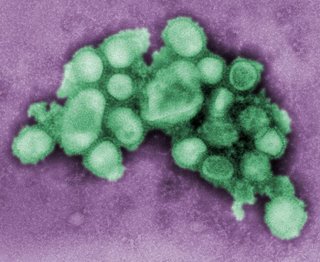
Image credit: Centers for Disease Control, Negative stain EM image of the swine influenza A/CA/4/09. http://www.cdc.gov/media/subtopic/library/diseases.htm

Mark Twain on the USPTO, circa 1867

February was a blur; I have three or four new posts in various stages of completion, so check back soon. In the meantime, I offer a quote from The Innocents Abroad, which I'm in the midst of reading. The remark was written by Twain (or Sam Clemens, as it were) while he was touring Rome and the Vatican on an expedition to the Mediterranean in 1867, and published two years later.
The Best Things in Life are Free, Part II

For science history enthusiasts, this is a banner weekend. Free events at the University of Wisconsin-Madison campus promise to be fascinating glimpses into the lives of two of the most ground-breaking scientists in history, Galileo and Charles Darwin.

Talking About the Weather

I would have posted this sooner, if not for the urge to hibernate.

Six dots that open the world

The holidays often bring news from friends in all corners of the world, and this year was no exception. One of the most fascinating updates was from a friend living in East Lansing, Michigan, where I attended graduate school at Michigan State University. I met her when I was studying at the MSU-DOE Plant Research Laboratory. A member of the talented staff who keep the institute running, she is a scientific editor and often lent her keen eyes to my first manuscripts. She wrote this year to describe dual and overlapping interests, music and Braille:
Killer mold reveals its romantic side

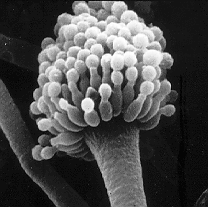
Take a deep breath. Now, don’t panic, but unless you live in a sterile chamber, you just breathed in between 1 and 100 spores of a killer mold called Aspergillus fumigatus. The spores are lightweight, microscopic, and everywhere – there’s literally no escaping them. However, if your immune system is intact (and I sincerely, absolutely hope that is the case), you need not fear for your life. The spores you just inhaled will be efficiently attacked by your innate immune system, which will render them dead as a doornail. And rest assured that this microscopic drama will continue to occur every day of your life, as it has for as long as you’ve lived.

Seasonal science: cranberry harvesting and turkey genomics – pass the stuffing

On your Thanksgiving table, consider the cranberry. Especially if you are so lucky as to have freshly prepared cranberry dressing in all its tart and tangy goodness. When you consider what went into getting those garnet jeweled fruits to your table, this unassuming side dish is remarkable.